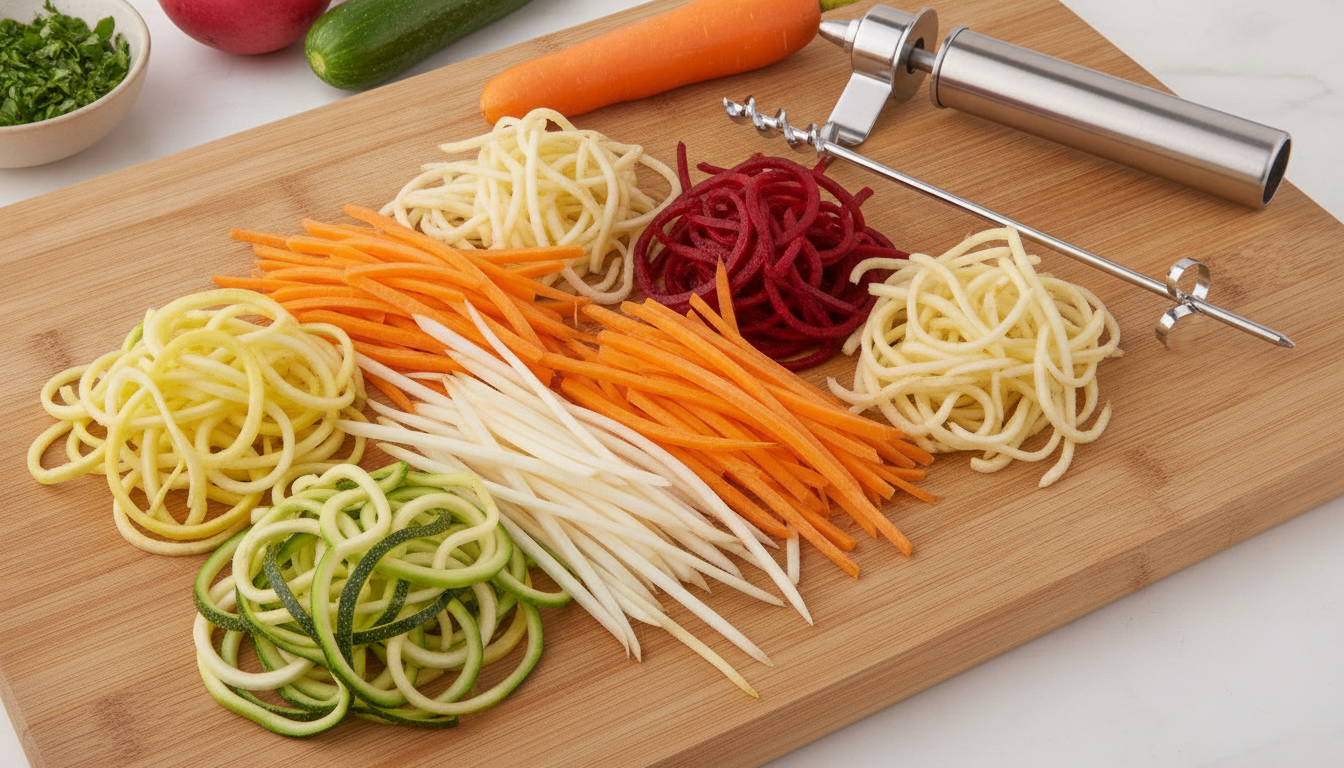
The best vegetables to spiralize are the ones that are firm enough to hold their shape, long enough to make continuous strands, and mild enough to pair with a wide range of sauces and seasonings. A good rule: choose produce that’s sturdy, not overly watery, and roughly cylindrical.
Zucchini is the classic choice because it’s tender, cooks quickly, and tastes great raw or lightly sautéed. Yellow summer squash works the same way with a slightly sweeter flavor. Carrots create crisp, thin noodles that stay snappy—ideal for salads, slaws, and quick stir-fries. Cucumbers spiral nicely for cold dishes, especially when kept unpeeled or partially peeled for structure.
Sweet potatoes and butternut squash (neck portion) make sturdier spirals that roast well and stand up to richer sauces. Because they’re denser, they may need a stronger spiralizer and a bit more cooking time. Beets are another great pick if you want bold color and earthy flavor—excellent raw in salads or quickly sautéed (just note they can stain cutting boards and hands).
Daikon radish and jicama spiral into crunchy strands that shine in fresh, citrusy dishes. Broccoli stems are surprisingly good once peeled; they produce firm spirals with a mild, slightly sweet taste. If a vegetable is short, irregularly shaped, or has a large seedy core, trim it into straighter sections first for smoother spirals.
Pick medium-to-large vegetables for longer strands, chill softer produce before spiralizing, and pat watery spirals (like zucchini) dry before saucing. For more vegetable-by-vegetable guidance and serving ideas, visit https://cookstep.shop/what-vegetables-are-good-to-spiral/.
For Best Vegetables to Spiralize: Top Picks & Tips, the best answer depends on fit, material, care instructions, and how the product will be used day to day.
Not always. Zucchini, cucumber, and carrots are great raw, while sweet potato and butternut squash usually taste best cooked to soften their texture.









Leave a comment