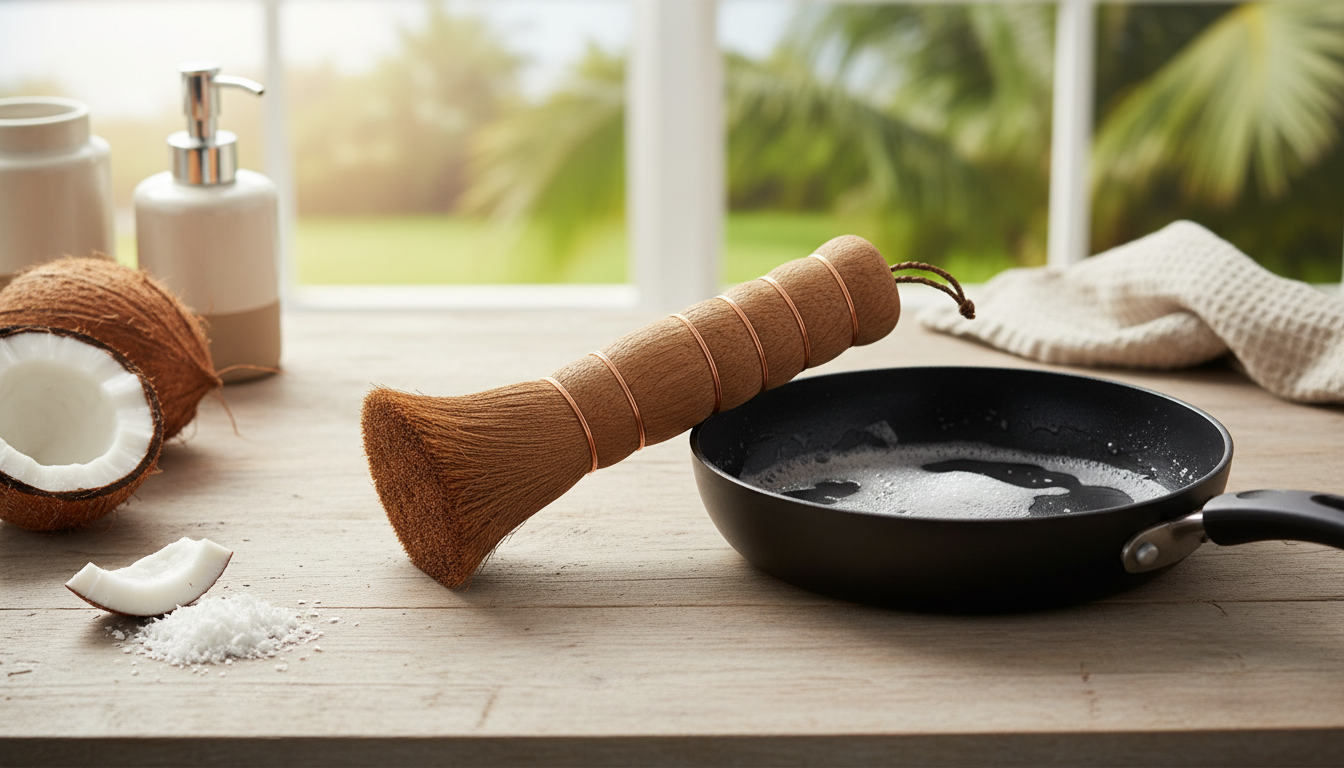
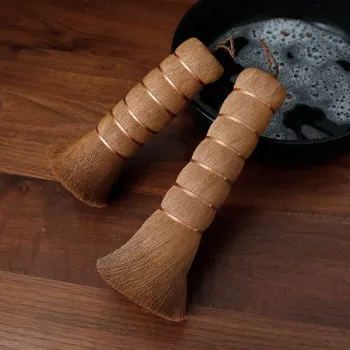
A natural-fiber pot brush can remove stuck-on food without being harsh on delicate coatings. This long-handle coconut palm brush is designed for a comfortable grip, better reach, and everyday cleanup of non-stick cookware—while keeping plastic-heavy tools out of the sink and helping you maintain a lighter touch on coated surfaces.
Non-stick cookware tends to clean up quickly when you use the right tool and the right pressure. This brush is made for routine residue removal—think oils, sauces, softened food, and the film that can cling to pan walls after sautéing or simmering.
It’s especially handy when you want to avoid abrasive powders and metal scrubbers, yet still need enough stiffness to nudge off stuck-on bits around curved edges and corners.
Coconut palm fibers are naturally firmer than many soft plant fibers. That stiffness helps the bristles “grab” food films and loosen residue, so you can rely more on warm water and mild soap instead of harsh scouring.
| Feature | Why it matters for non-stick pans | What to look for |
|---|---|---|
| Bristle stiffness | Too hard can scratch; too soft won’t lift residue | Medium stiffness with controlled pressure |
| Head shape/size | Fits corners and curved walls | Smaller head for precision, rounded edges |
| Handle length | Keeps hands away from hot water and adds leverage | Long enough for deep pots, comfortable grip |
| Drying behavior | Moisture can shorten tool life | Good airflow storage; hang/stand to dry |
| Cleaning method | High heat/soaking may degrade natural materials | Rinse well, avoid prolonged soaking |
The main goal with non-stick is effective cleaning without grinding debris into the coating. A brush like this encourages gentle scrubbing: you can loosen residue with repeated light passes instead of “going harder” with an abrasive pad.
If you’re aiming for a simpler sink setup, pairing a natural-fiber brush with a mild detergent can fit well with everyday handwashing guidance from the American Cleaning Institute.
Technique matters as much as the tool. The safest approach is to let time and warm water do the heavy lifting, then use the brush to finish the job.
If you’re choosing dish soaps or cleaners, the EPA Safer Choice program can be a helpful reference point for products with vetted ingredient criteria.
For kitchens that also care about materials touching food-contact surfaces, the FDA’s overview of Food Contact Substances explains how materials used around food are regulated and evaluated.
If you want a simple, plant-based option for routine cleanup, the Natural Coconut Palm Pot Brush with Long Handle for Non-Stick Pans is designed for everyday washing, quick degreasing, and reaching into deeper cookware with less hand contact in hot water.
| Item | Price | Availability |
|---|---|---|
| Natural Coconut Palm Pot Brush with Long Handle for Non-Stick Pans | $6.82 | In stock |
It can if the bristles are very stiff or if you press too hard, especially on older coatings. Use light pressure, soak first for stuck-on food, and follow your cookware maker’s care instructions to minimize risk.
Rinse it thoroughly to clear oils and trapped bits near the bristle base, then shake off excess water. Air-dry fully (hang it or store bristles-down), avoid prolonged soaking, and replace the brush if odor persists after cleaning.
Yes—daily use with warm-to-hot water and mild dish soap is appropriate for routine cleaning. Avoid leaving it submerged for extended periods, and let it dry completely between uses to help extend its lifespan.










Leave a comment