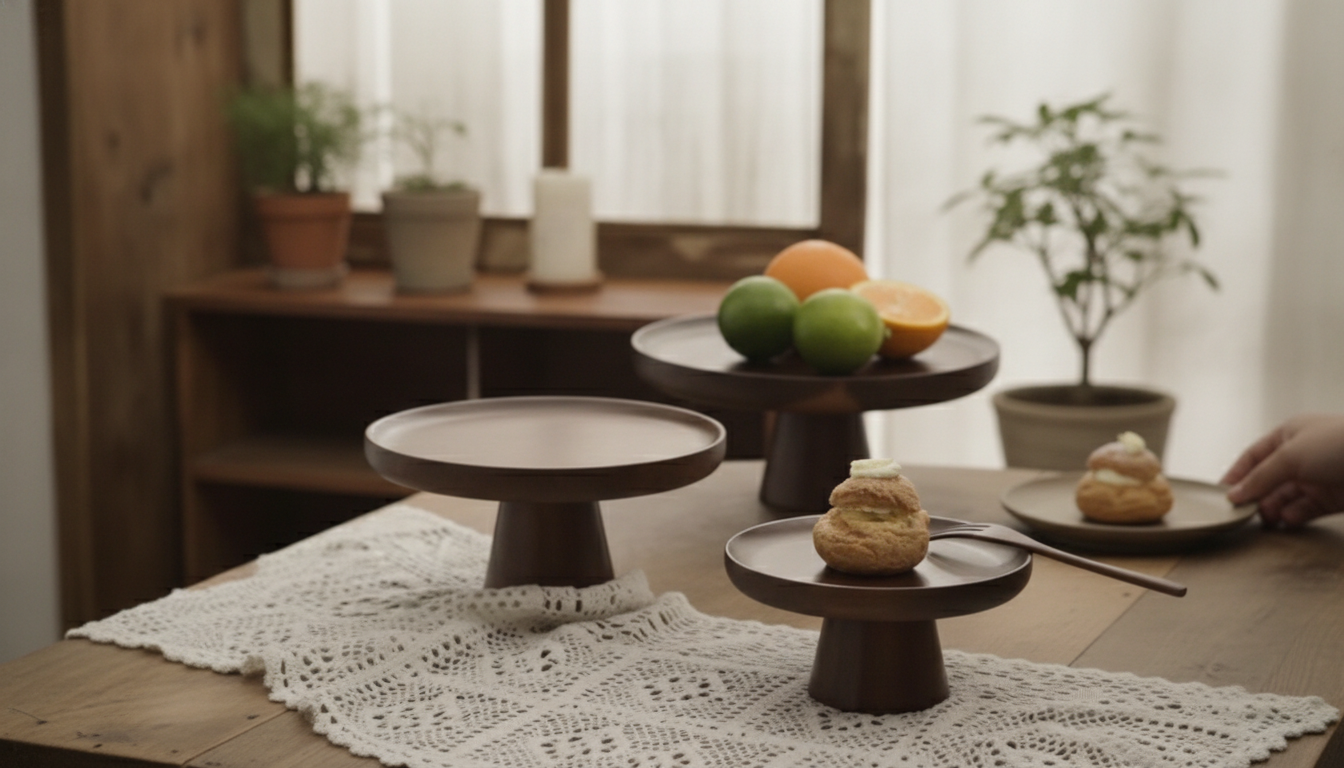
A solid wood cake tray brings a warm, minimalist look to dessert presentation while offering a stable surface for serving cakes, pastries, and small bites. With the right care, a wooden tray can stay smooth, clean, and attractive for everyday tea time or special gatherings. Whether it’s a quiet afternoon with matcha or a weekend brunch spread, a Japanese-inspired wood tray helps keep the table feeling calm, intentional, and inviting.
Solid wood has a natural character that feels right at home in Japanese-leaning table settings—simple, functional, and quietly beautiful.
Not all wooden trays feel the same in daily use. A few small design choices can make serving easier and cleanup faster.
A solid wood cake tray earns its spot in the kitchen because it doesn’t have to be “cake-only.” It can act as a small serving board, a tidy staging area, or a countertop organizer.
Wood stays best-looking when moisture is managed and cleaning is gentle. If the tray is used for food contact, treat it like other kitchen wood tools: clean promptly, dry well, and avoid extended exposure to water or heat. For general food-safety guidance on kitchen boards and surfaces, see the USDA FSIS resource on cutting boards (cleaning and food safety) and the FDA’s Food Code basics for cleaning and sanitizing.
Use the table below to decide whether a wood tray, pedestal stand, or plate fits the moment. For frequent serving and easy storage, a flat tray is often the most flexible option.
| Serving option | Best for | Strengths | Things to consider |
|---|---|---|---|
| Solid wood cake tray | Daily tea time, slices, assorted pastries | Warm look, easy to carry, doubles as a small board | Avoid soaking; needs gentle drying |
| Pedestal cake stand | Showcase whole cakes at parties | Adds height and drama, keeps cake elevated | Bulkier to store; can feel formal for casual use |
| Large ceramic plate | Simple serving and quick cleaning | Dishwasher-friendly, neutral styling | Can be slippery; less tactile warmth |
| Bamboo serving board | Snacks and charcuterie-style spreads | Lightweight, often budget-friendly | May show knife marks; varies by finish quality |
Small accessories make the tray feel like part of a complete set rather than a standalone piece. The goal is an easy flow from serving to eating, without clutter.
Yes, a wooden cake tray can be safe for food when it has a food-safe finish and is cleaned properly. Wash it promptly with mild soap and warm water, avoid soaking, and dry it thoroughly so moisture doesn’t linger in the wood.
Start with mild soap and warm water, then dry immediately. For lingering odors, a light sprinkle of baking soda left briefly on the surface can help, but avoid soaking and harsh chemicals; if the finish allows, re-oil afterward to restore the surface.
Slicing cake on a solid wood tray is usually fine for occasional use, especially with a soft blade and gentle pressure. If frequent cutting is expected or you want to preserve the finish, use a separate cutting board and keep the tray for serving.









Leave a comment